Facebook advertising works for UK law firms when it is pointed at consumer practice areas: conveyancing, family law, wills and probate, and personal injury, where clients are ordinary people who scroll Facebook every day. It is usually the wrong first channel for commercial work, where decision makers respond better to LinkedIn and Google Ads.
This 2026 guide walks through setting up a compliant law firm page, building a content strategy, designing campaigns in Meta Ads Manager, measuring return, and staying on the right side of SRA rules. It follows the approach legal marketing specialists such as Rachel Tombs of Orion Legal Marketing have long argued for: treating Facebook as a serious client acquisition channel rather than an afterthought.
Understanding Facebook as a Marketing Platform for Law Firms
Facebook is more than just a social networking site; it’s a powerful marketing tool that law firms can leverage to reach their target audience. With its vast user base and diverse demographics, Facebook offers unique opportunities for solicitors to connect with potential clients and promote their services.
The Importance of Facebook Demographics in the UK
When it comes to marketing on Facebook, understanding the platform’s demographics is crucial. In the UK, Facebook has a wide range of users across various age groups, making it an ideal platform for law firms targeting different segments of the population.
One demographic segment that has been rapidly growing on Facebook is the 65+ age group. This is particularly relevant for legal services, as older individuals may require assistance with matters such as estate planning, wills, or elder law issues. By tailoring their marketing efforts towards this demographic through targeted ads or engaging content, law firms can effectively reach and attract potential clients.
Personal vs Business Profiles: Why Solicitors Should Maintain Both
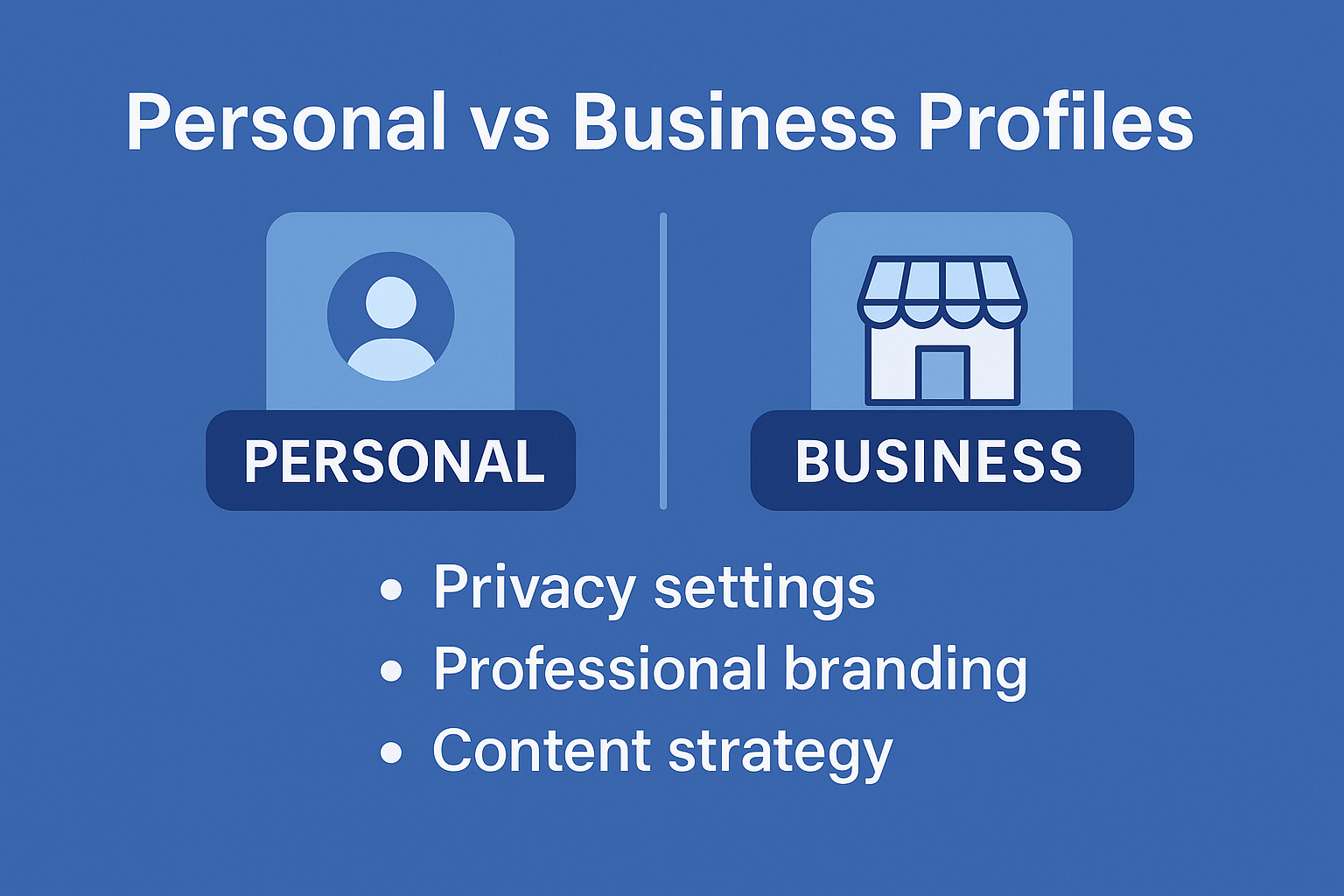
As a solicitor, it’s important to have both a personal profile and a business page on Facebook. While your personal profile allows you to connect with friends, family, and acquaintances on a more personal level, your business page serves as an official representation of your law firm.
Here are some key differences between personal profiles and business pages:
- Privacy settings: Personal profiles have stricter privacy settings compared to business pages. This means that anything you share on your personal profile may be visible to your connections unless you adjust the settings accordingly.
- Professional branding: Your business page is where you can showcase your law firm’s brand identity, including your logo, mission statement, and services offered. This helps establish credibility and professionalism in the eyes of potential clients.
- Content strategy: While you can share personal updates and opinions on your personal profile, it’s essential to maintain a professional tone and focus on relevant legal topics when posting on your business page.
By maintaining both profiles separately, solicitors can strike a balance between their personal and professional lives while effectively promoting their legal practice.
Establishing Social Media Policies within Law Firms
With the increasing use of social media by professionals in various industries, including law, it’s crucial for law firms to establish clear social media policies. These policies protect the firm’s professional reputation and ensure compliance with ethical standards set by regulatory bodies.
Here are some key considerations when creating a social media policy for your law firm:
- Confidentiality: Emphasize the importance of client confidentiality in all social media interactions. Lawyers should be mindful not to disclose any sensitive information or discuss specific cases publicly.
- Professional conduct: Outline expectations regarding professional behavior online. This includes refraining from engaging in arguments or negative discussions about colleagues or competitors.
- Personal vs professional use: Clearly define the boundaries between personal and professional use of social media platforms. Lawyers should understand when it is appropriate to represent themselves as individuals versus when they should act as representatives of the firm.
By implementing these guidelines within your law firm’s social media policy, you can safeguard your professional reputation while upholding ethical standards in your online presence.
Privacy Settings Recommendations for Solicitors’ Personal Profiles
As legal professionals, solicitors have a duty to protect client confidentiality at all times. This extends beyond their work-related activities to their personal online presence.
Here are some privacy settings recommendations for solicitors’ personal profiles on Facebook:
- Limit friend requests: Be selective about accepting friend requests from individuals you do not know personally. This helps prevent potential clients or opposing parties from gaining access to your personal information.
- Adjust post visibility: Review the default visibility settings for your posts and make sure they align with your privacy preferences. Consider setting certain posts or updates as “Friends only” or “Custom” if you want to restrict visibility.
- Be cautious with tagged photos: Regularly review photos that others have tagged you in and remove any tags that may compromise client confidentiality or portray you unprofessionally.
By implementing these privacy measures on their personal profiles, solicitors can create a boundary between their professional responsibilities and personal life while safeguarding client confidentiality.
Setting Up a Professional Law Firm Facebook Business Page
Creating a Facebook Business Page for your law firm is an essential step in establishing your online presence and connecting with potential clients. In this guide, we’ll walk you through the process of setting up and optimizing your law firm’s Facebook Business Page, ensuring that it reflects your brand and attracts the right audience.
1. Create Your Facebook Business Page
To get started, follow these steps to create your Facebook Business Page:
- Log in to your personal Facebook account.
- Click on the “Create” button in the top right corner and select “Page.”
- Choose the “Business or Brand” option.
- Enter your law firm’s name and select the appropriate category (e.g., lawyer, legal service).
- Click “Continue” to proceed.
For more detailed instructions on creating a Facebook page, refer to Facebook’s official guide.
2. Add Profile and Cover Photos
Visuals play a crucial role in creating a professional image for your law firm. Here’s how to optimize your profile and cover photos:
- Profile Photo: Use a high-quality image of your law firm’s logo or a team photo that conveys authority and professionalism.
- Cover Photo: Choose an engaging cover photo that represents your practice area or showcases your team’s expertise.
3. Customize Your Web Address
Having a customized web address (URL) for your Facebook Business Page makes it easier for clients to find you. Here’s how to customize it:
- Go to your Facebook Business Page.
- Click on “About” in the left-hand menu.
- Under “Username,” click “Create Username.”
- Enter your desired username (it should be unique) and click “Save Changes.”
For further assistance with claiming your vanity URL on Facebook, check out this helpful Post Planner article.
4. Optimize Your Page Tabs
Facebook allows you to customize the tabs on your Business Page, which can enhance user engagement and make important information easily accessible. Consider adding the following tabs:
- Services: Highlight the legal services you offer.
- Reviews: Showcase client testimonials and reviews.
- Events: Promote any upcoming events or webinars hosted by your firm.
- Videos: Share informative videos about legal topics or introduce your team members.
To customize your page tabs, follow these steps:
- Go to your Facebook Business Page.
- Click on “Settings” in the top right corner.
- Select “Templates and Tabs” from the left-hand menu.
- Here, you can add, remove, or reorder tabs according to your preferences.
By following these steps, you’ll be able to create a professional Facebook Business Page for your law firm that effectively represents your brand and engages with potential clients.
Branding & Content Strategy on Facebook for Solicitors
Establishing a powerful branding for law firms on Facebook starts with an About section that is informative and strategically optimised. This section should incorporate relevant keywords such as “legal advice”, “family law solicitor” or “property conveyancing” to improve visibility within Facebook’s own search and in external search engines. Clear, concise language paired with a tone that reflects professionalism and approachability sets the foundation for trust.
Constructing a content strategy for law firm Facebook page involves more than posting regularly; it requires purposeful planning. Develop a content calendar centered on diverse yet targeted themes:
- Legal tips: Bite-sized, actionable advice tailored to your practice areas.
- Industry news: Updates on legislation changes or landmark cases to showcase expertise.
- Charity involvement stories: Humanise your firm, demonstrating community engagement.
- Client testimonials: Use video and photos to increase authenticity and engagement.
Visual content, especially videos, significantly increases interaction rates. Videos explaining complex legal processes simplify engagement for prospective clients while reinforcing authority.
A question frequently arises: are Facebook ads for solicitors worth it? When integrated with a strong branding identity and consistent content delivery, paid campaigns amplify reach effectively. Targeted ads combined with organic efforts create a compelling presence that converts awareness into action.
Leveraging Local Communities & Paid Advertising on Facebook for Legal Services: Is It Worth It?
Local Facebook groups for solicitors present untapped opportunities for lead generation. These communities act as hubs where legal professionals exchange insights, share referrals, and engage with potential clients. To maximise visibility, incorporate targeted keywords related to your practice areas within posts and comments. This strategic use of language enhances searchability inside groups, making it easier for prospects to discover your expertise.
Best practices when engaging in local groups include:
- Consistent participation without overt self-promotion
- Sharing valuable legal updates and clarifications relevant to the community
- Responding promptly to queries with authoritative yet approachable answers
Paid advertising on Facebook for lawyers complements organic efforts by amplifying reach precisely where it matters most. Targeted Facebook ads for legal services earn their keep when campaigns are built with specificity, focusing on demographics, interests and geographic parameters aligned with your client base.
Key considerations for paid social for solicitors:
- Setting clear objectives (lead generation, webinar sign-ups, consultations)
- Testing diverse ad creatives and messaging to identify what resonates
- Allocating budgets based on campaign performance metrics tracked via Ads Manager
Effectiveness hinges on continuous optimization fueled by analytics insights rather than set-and-forget approaches. When executed correctly, paid strategies accelerate client acquisition while reinforcing brand authority within competitive local markets.
Designing High-Impact Lawyer-Focused Facebook Ad Campaigns
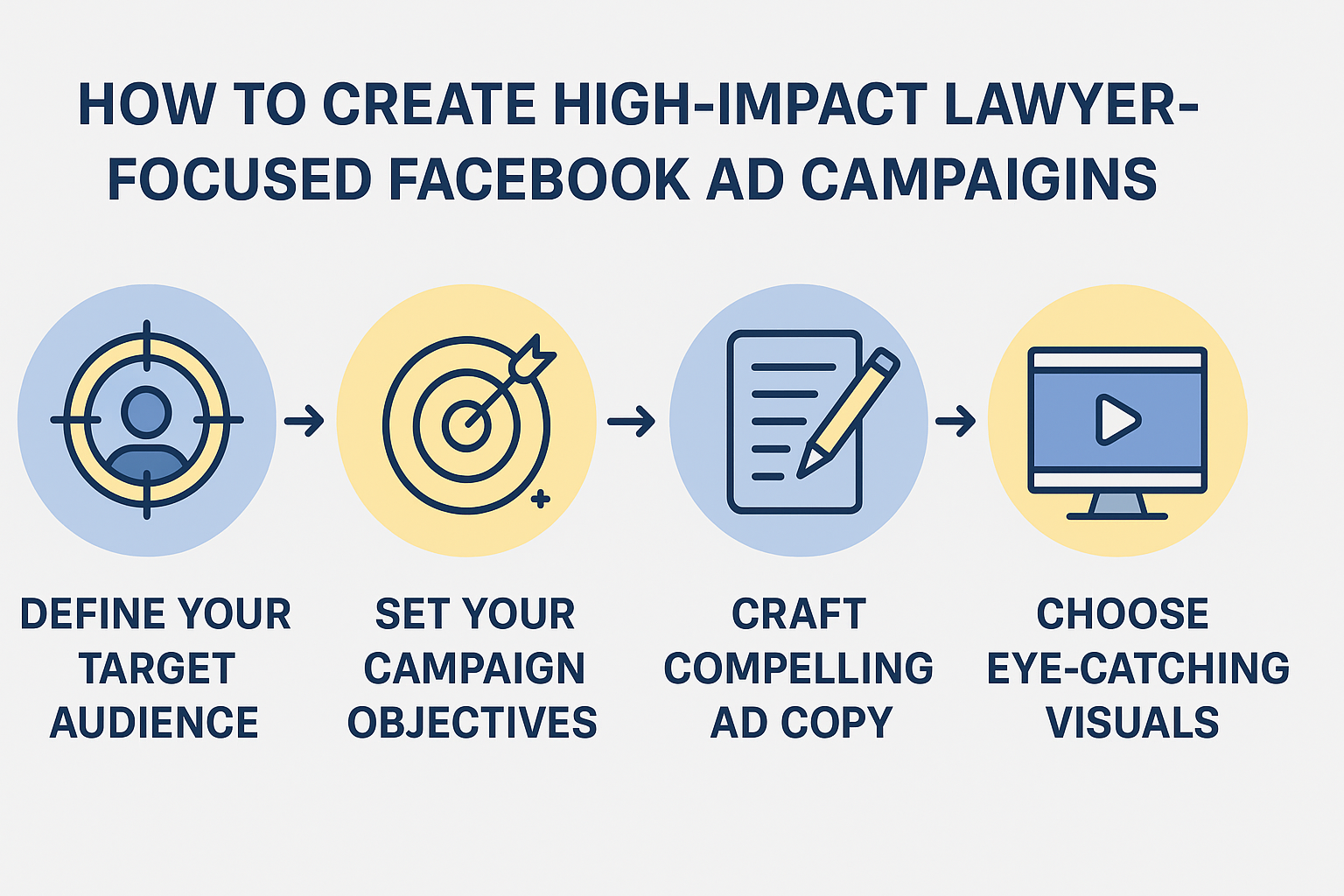
Creating a successful Facebook ad campaign for lawyers requires careful planning and execution. In this section, we will outline the step-by-step process of creating compelling ad campaigns using Ads Manager, with an emphasis on storytelling that addresses client pain points and the solutions offered by the firm.
Step 1: Define Your Target Audience
Before you start creating your ads, it’s important to have a clear understanding of who your target audience is. This will help you tailor your messaging and creative to resonate with them. Consider factors such as:
- Age
- Gender
- Location
- Interests
- Behaviours
For more detailed insights on how to effectively define your target audience, consider conducting thorough market research.
Step 2: Set Your Campaign Objectives
What do you want to achieve with your Facebook ad campaign? Whether it’s generating leads, increasing website traffic, or promoting a specific service, having a clear objective will guide your ad creation process.
Step 3: Craft Compelling Ad Copy
Your ad copy should be concise, persuasive, and aligned with your campaign objectives. Use language that speaks directly to your target audience and highlights the benefits of choosing your law firm.
Step 4: Choose Eye-Catching Visuals
Visuals play a crucial role in grabbing attention and conveying your message. Depending on your target audience and the nature of your services, you can choose between images or videos as the main visual element of your ads.
Step 5: Implement A/B Testing
A/B testing allows you to compare different versions of your ads to see which performs better. Experiment with various creatives (image vs. video), copy variations, CTAs (e.g., book consultation vs. download guide), and audience segments to optimize your campaign results.
Step 6: Monitor and Analyze Performance
Once your ads are live, it’s important to regularly monitor their performance using Facebook Ads Manager. Pay attention to key metrics such as click-through rates, conversion rates, and cost per acquisition. Use these insights to make data-driven decisions and improve future campaigns.
By following this stepwise process and incorporating A/B testing into your strategy, you’ll be able to create high-impact lawyer-focused Facebook ad campaigns that drive results for your firm.
Video Marketing & Mobile Optimisation in Legal Advertising on Facebook
Are Facebook ads for solicitors worth it? The answer lies in using the undeniable power of video marketing combined with precise mobile optimization. Video content grabs attention and generates significantly higher engagement rates than static images or text alone. Solicitors can take advantage of this by creating:
- Client success stories that humanise legal services and build trust
- Explainer videos simplifying complex legal processes, making them accessible and reassuring
- Commentary on topical celebrity or legal news, positioning the firm as a current and authoritative voice
Ad Formats Must Cater to Mobile Users
Ad formats must cater to users who overwhelmingly browse Facebook on their phones. This means optimising every ad type (images, videos, polls, stories) to deliver clear, visually compelling experiences on small screens. Mobile-first design principles include:
- Clear, concise messaging paired with bold visuals
- Fast-loading assets that don’t sacrifice quality
- Interactive elements such as polls or swipeable stories engaging users naturally within the mobile environment
The Risks of Ignoring Mobile Optimisation
Ignoring mobile optimisation risks alienating the majority of potential clients, who scroll their feeds on a smartphone. Integrating video marketing with tailored mobile strategies ensures legal firms maximise reach, brand recall, and lead generation through Facebook’s dynamic advertising ecosystem.
Measuring Success & Improving ROI Using Analytics Tools
Mastering Facebook advertising demands rigorous analysis of campaign performance. Solicitors must analyze performance of Facebook ad campaigns using Insights and Ads Manager reports to extract actionable data that drives continuous improvement.
Key metrics to monitor include:
- Reach: Measures how many unique users have seen your ads or page content. Expanding reach increases brand awareness among potential clients.
- Engagement Rate: Tracks interactions such as likes, comments, shares, and clicks. High engagement signals relevant and compelling content.
- Click-Through Rates (CTR): Percentage of viewers clicking on an ad link. CTR gauges the effectiveness of creative elements and call-to-action clarity.
- Conversions: Actions taken by users after clicking ads, including appointment bookings, contact form submissions, or downloads. Conversions reflect true return on investment.
Meta Business Suite insights offer granular data on page performance and audience demographics. It reveals which posts resonate best and when your target audience is most active. Ads Manager complements this by providing real-time analytics on paid campaigns, allowing for precise budget adjustments and targeting refinements.
Implement A/B testing with different creatives and copy variations to identify top performers. Use retargeting data to re-engage users who showed interest but did not convert initially. Continuous optimization based on these metrics ensures maximum ROI while minimizing wasted spend.
Data-driven decision making empowers law firms to outsmart competitors by focusing resources on high-impact strategies tailored for their unique market segments.
Risks & Ethical Considerations When Using Facebook Advertising in Legal Services
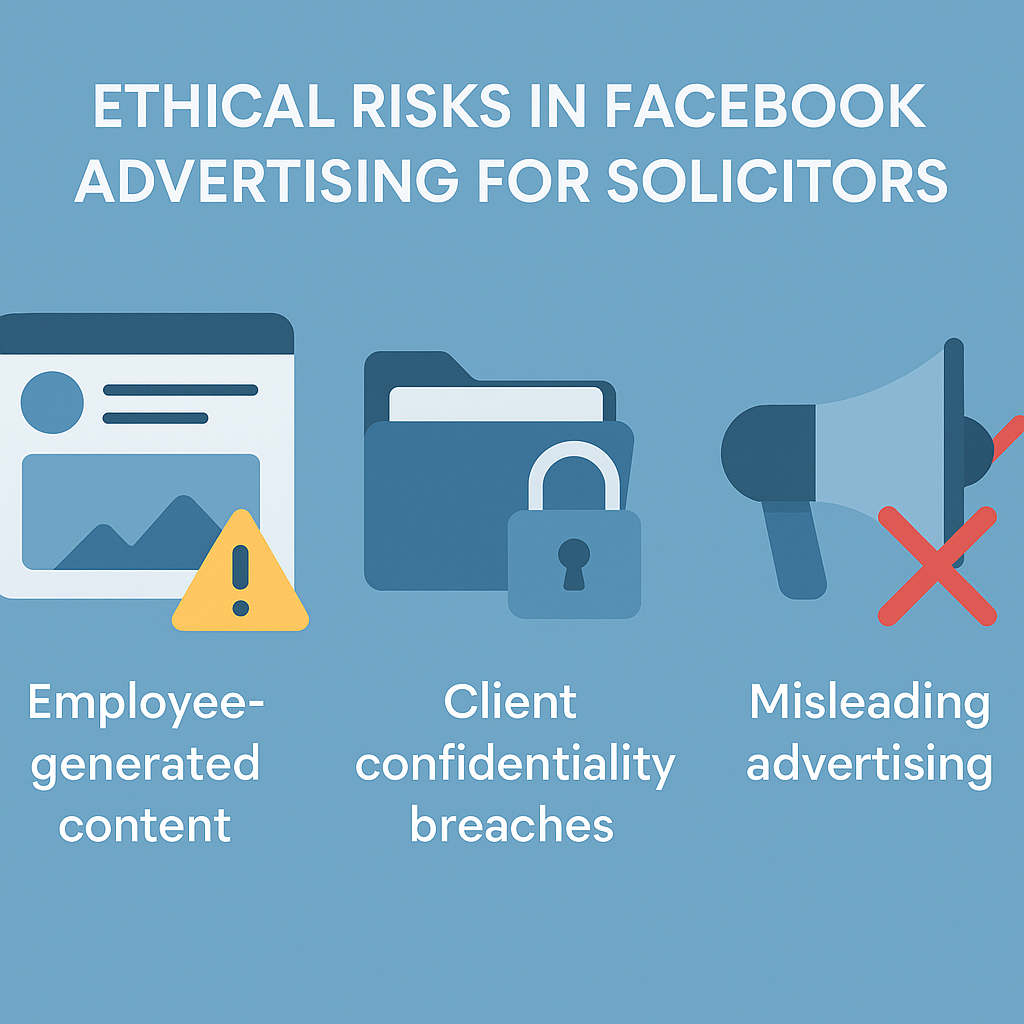
Maintaining a professional reputation on social media is crucial for solicitors using Facebook advertising. If employees post improperly or client-related information is shared unintentionally, it can lead to serious consequences such as breaches of confidentiality, loss of public trust, and possible disciplinary action under professional conduct rules.
Key challenges include:
- Employee-generated content: Posts or comments made without oversight may expose the firm to reputational damage.
- Client confidentiality breaches: Even unintentional disclosures through photos, case details, or interactions violate ethical obligations.
- Misleading advertising: Overpromising services or using testimonials improperly can contravene advertising standards.
The Law Society provides explicit guidelines on digital conduct and advertising compliance tailored to solicitors:
- All online content must be honest, clear, and not misleading.
- Advertising should not exploit client vulnerabilities or make unverifiable claims.
- Solicitors must ensure compliance with the Solicitors Regulation Authority (SRA) Code of Conduct when promoting services.
- Social media policies should be implemented within firms to regulate employee activity and safeguard the firm’s integrity.
Implementing strict internal protocols reduces risks and leverages the benefits of using Facebook in legal marketing while preserving trust. Ethical vigilance combined with strategic communication empowers law firms to confidently use Facebook’s vast reach without compromising their professional standing.
Integrating Facebook Ads Within Broader Digital Marketing Strategy
Combining paid social efforts with organic SEO tactics such as local SEO targeting around practice locations enhances lead generation effectiveness. This approach allows law firms to reach a wider audience and attract potential clients through multiple channels.
In 2026 that broader strategy should also include AI search. Prospective clients increasingly ask ChatGPT and Google AI Overviews to recommend a solicitor before they ever click an ad, and AiBoost’s 2026 study of UK small businesses found that around half are effectively invisible in AI search (read the study). Firms that pair Facebook campaigns with strong organic and AI visibility get more value from every click, because prospects who research the firm afterwards find independent confirmation rather than silence.
Choosing Campaigns by Practice Area: A Comparison
Not every practice area suits the same Facebook setup. The table below shows how UK firms typically match objective, creative and compliance care to the work they want more of.
| Practice area | Campaign objective | Creative that works | Compliance note |
|---|---|---|---|
| Conveyancing | Leads (quote request form) | Plain explainer of the moving process, local imagery, clear fee information | Residential conveyancing falls under the SRA Transparency Rules, so any price in an ad must match your published pricing |
| Family law | Traffic to an advice guide, then remarketing to an enquiry page | Calm, reassuring video from a named solicitor | Handle sensitive situations carefully and avoid creative that could label a viewer’s circumstances in their feed |
| Wills and probate | Leads (guide download or callback) | Checklist-style content aimed at older audiences, including the growing 65+ user base | Keep claims factual and avoid pressure tactics around bereavement |
| Personal injury | Leads (eligibility check) | Short client story format with plain-English next steps | Funding statements such as no win, no fee must be accurate with the key terms clear, in line with the SRA Code of Conduct |
Whichever area you start with, run one practice area per campaign so budget, creative and results stay readable, and judge success on cost per qualified enquiry rather than clicks.
Conclusion
Facebook advertising earns its place in a UK law firm’s marketing mix when it is run deliberately. By implementing the best Facebook advertising strategies tailored for lawyers, law firms can tap into a vast user base and leverage innovative techniques to reach their target audience effectively. With the right approach and a well-thought-out digital marketing strategy, Facebook ads for solicitors are worth the investment for most consumer-facing practices.
Frequently asked questions
Are Facebook ads worth it for solicitors in the UK?
Yes, for consumer-facing work such as conveyancing, family law, wills and probate, and personal injury. Facebook reaches ordinary clients in your local area while they are not actively searching, which complements search advertising. For commercial and corporate work, LinkedIn and Google Ads are usually better first choices.
Can solicitors advertise on Facebook under SRA rules?
Yes. Nothing in the SRA Code of Conduct prohibits social media advertising, but every ad must be accurate and never misleading, and any pricing you mention must be consistent with what the SRA Transparency Rules require you to publish. Keep testimonials genuine and avoid claims you cannot evidence.
How much should a law firm budget for Facebook ads?
Costs are set by auction, so they vary with practice area, location and competition. A sensible approach is a modest test budget for four to six weeks, one practice area per campaign, judged on cost per qualified enquiry rather than clicks. Scale what pays back and switch off what does not.
How long before Facebook ads start producing enquiries?
Meta’s delivery system goes through a learning phase while it works out who responds to your ads, so early results are noisy. Give a campaign a few weeks of consistent spend before judging it, then compare cost per enquiry against your other channels.
Do law firm Facebook ads need a dedicated landing page?
Ideally, yes. Sending clicks to your homepage forces visitors to hunt for the service they saw advertised. A page that matches the ad’s promise, with a short form or callback option, converts better and makes tracking straightforward.
Which campaign objective should a law firm choose in Ads Manager?
For most firms the leads objective, paired with an instant form or a conversion-tracked landing page, is the right starting point. Use traffic or engagement objectives only when you are warming up an audience for remarketing.
Want to know whether ChatGPT, Perplexity, or Google AI Overviews mention your firm? Run a free first-party visibility audit on your domain in under a minute and see exactly which queries cite you and which do not.