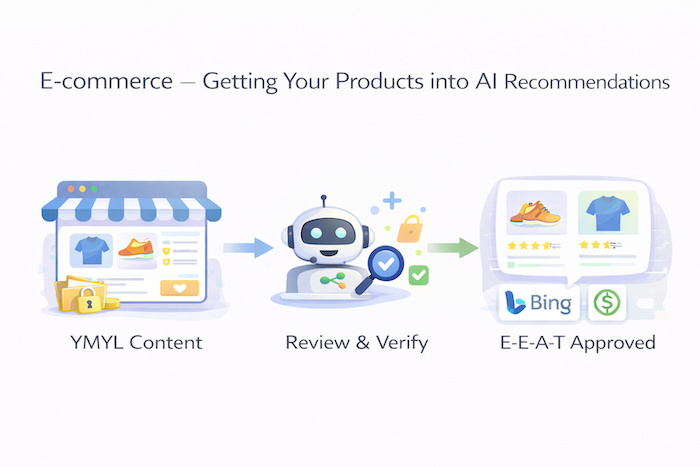
Conversational AI assistants are becoming the first stop for product research. Instead of browsing category pages or scrolling through search results, shoppers ask questions like “help me choose between these bikes” or “find me a bridesmaid dress for a summer wedding that costs under $500.” ChatGPT’s shopping research feature demonstrates how AI synthesizes product information from across the web, asks clarifying questions and delivers personalized buyer guides. As AI‑driven answers become a new “top of the page,” getting your products mentioned by these systems is crucial to discovery.
AI product recommendations are not simple ads. Systems like ChatGPT and Google’s AI‑powered search select products based on structured metadata, reviews, pricing and contextual cues rather than paid placement. Generative engines extend traditional SEO by deciding which items to suggest inside a concise answer; even if a shopper never clicks a link, being recommended influences their buying journey. This guide explains how e‑commerce teams can optimise for AI recommendations ethically.
How AI Generates Product Recommendations
Blending multiple signals
Generative AI product searches differ from keyword‑driven SEO. Models summarise content from multiple sources, including first‑party product data, expert reviews, authoritative lists and price/availability feeds. ChatGPT’s shopping research, for example, uses information from high‑quality sources to create personalised guides and will ask follow‑up questions to refine the search. Salsify notes that generative AI responds to phrase‑based queries – e.g., “find me a bridesmaid dress for a summer wedding, no ruffles, any colour but green and under $500” – by filtering across hundreds of sites and returning options that meet those constraints. The system can eliminate results above a price threshold and propose similar alternatives if nothing fits.
Behind the scenes, AI engines weigh different evidence. A 2024 study of four major chatbots found that ChatGPT’s product recommendations are most influenced by authoritative list mentions (41 %), followed by awards and accreditations (18 %), online reviews (16 %), and customer examples/usage data (14 %). When top lists disagree, the model defers to trusted reviews; e.g., ChatGPT’s list of “lawnmowers under $1 000” relied primarily on New York Times and Consumer Reports reviews. Google’s Gemini weights authoritative lists even more heavily (49 %) but also considers Google website authority, local business reviews and star ratings. In practice, this means a product’s visibility depends not only on your own data but also on independent coverage and customer sentiment.
Why upstream visibility matters
AI‑generated answers often replace category browsing. Salsify reports that 68 % of shoppers spend an hour or less researching products and that generative AI can deliver targeted results using context about location, preferences and budget. With the ability to filter by price and personal history, these systems position products before a shopper reaches your store. Although recommendations are not transactions, they strongly shape what gets considered and can pre‑qualify buyers who are ready to purchase.
Structured Data: Your Ticket Into AI Answers
AI models need clear, machine‑readable signals to identify and compare products. Structured data – JSON‑LD or schema markup – labels entities and their attributes, reducing the risk of misinterpretation by natural‑language models. Product schema spells out key details such as price, availability, brand, GTIN and variant information. Microsoft’s retail AI guide (via Practical eCommerce) recommends tagging products with Product, Offer, AggregateRating, Review, Brand and ItemList schema types and including dynamic fields like price, availability, color, size, SKU/GTIN and modification date.
Google Search Central echoes this advice: product structured data allows search engines to display price, availability, review ratings, shipping and return policies in rich results; adding merchant feed data (via Google Merchant Center) ensures AI systems have up‑to‑date details like price and stock levels. Incomplete or inconsistent data can exclude a product from AI filtering. Feedonomics notes that AI discovery engines may miss products categorized too broadly (e.g., “footwear” instead of “footwear > outdoor > hiking boots”), or with missing fields like brand and color. Aligning structured and unstructured data is essential: unstructured descriptions and reviews must reinforce the same attributes, otherwise AI may ignore the listing.
Schema priorities
- Product identity: Use unique identifiers (GTIN/UPC), brand, model number and canonical product names. Without clear IDs, AI can’t reconcile listings across sites.
- Offer details: Price (with currency), availability status and condition. AI uses these to filter by budgets and stock.
- Aggregate ratings and reviews: Provide structured review data and link to reputable review platforms; this allows AI to summarise sentiments.
- Organisation and author information: Include
Organizationmarkup and authorship for buying guides to signal expertise.
Reviews and Social Proof: The New Authority Signals
AI recommendations rely heavily on aggregated user sentiment, not just star ratings. Bazaarvoice observes that AI shopping assistants analyze large volumes of authentic reviews to answer questions like which headphones stay put during workouts. ChatGPT’s shopping feature uses structured metadata and third‑party content, including public reviews, to select products and may display review summaries that highlight common likes and dislikes. Products with abundant, credible reviews gain prime visibility, while those lacking social proof often remain invisible.
The Microsoft guide recommends emphasising verified customer reviews, certifications and sustainability badges; AI systems penalise low‑trust language and exaggerated marketing claims. In the First Page Sage study, online reviews account for around 16 % of ChatGPT’s recommendation weighting and 13–31 % for Gemini and Perplexity. Therefore, soliciting honest reviews and showcasing third‑party accolades (awards, accreditations) are essential for AI visibility.
Content Marketing Beyond Product Pages
Answer‑first articles and buying guides
AI prefers explanatory content rather than purely transactional product pages. Microsoft’s retail guide advises creating intent‑driven product data: front‑load descriptions with use‑cases, include Q&A sections, comparison tables, alt text and transcripts for videos. Single Grain outlines a blueprint for AI‑friendly comparison pages: a decision snapshot summarising the best choice, quick‑glance badges (e.g., “best budget option”), a primary comparison table detailing specs and features, mini‑profiles for each product, use‑case subheadings, FAQs, and citations to external sources. Encoding decision criteria like pricing model, total cost, implementation complexity, integrations, ideal customer, compliance and limitations helps AI reason about trade‑offs and reproduce those details in its answers.
Neutral, honest comparisons
Generative engines reward transparency. Publish honest comparisons that include both strengths and weaknesses of your products and competitors. This may seem counter‑intuitive, but AI looks for balanced, informative explanations that it can safely reuse. Indiscriminately copying competitor descriptions or using overly promotional language reduces trust and may exclude your pages. Neutral tone and clear scoping (“best for X, not for Y”) make it easier for AI to align products with user intents.
Combining schema types
To reinforce entity clarity across your site, combine schema types like Product, Offer, ItemList, ProsAndCons, FAQPage and HowTo on comparison pages. This signals to AI that the page contains structured knowledge, not just marketing copy. Ensure that each product’s attributes in the table match the structured data on its product page.
Leveraging Your Own Site as a Source
Because AI models synthesise content from multiple domains, they may trust third‑party sources over corporate pages. However, you can make your own site a quotable resource by hosting editorial‑style buying guides separate from transactional copy. Provide context (who the product is for), detailed pros/cons, and clear attributions. Use bylines and author bios to signal expertise. This strategy positions your site as both a primary and secondary source: AI can cite your articles while also confirming product details from your structured data.
The Role of Third‑Party Mentions
AI engines do not rely solely on your website. The First Page Sage study found that authoritative list mentions (e.g., “best vacuum cleaners of 2025” articles) were the single largest factor in ChatGPT (41 %) and Gemini (49 %) recommendations. Awards, accreditations and external affiliations also carry significant weight. Being included in reputable buying guides, news articles and comparison lists can matter more than your own domain authority. Smaller brands can outrank larger competitors if they appear on respected “best of” lists or have notable certifications. Investing in PR, affiliate partnerships and thought‑leadership content that earns independent recognition increases the probability that AI will recommend your products.
Price Sensitivity and Filters in AI Answers
Generative AI frequently interprets queries with budget constraints. Salsify’s example shows that when a user specifies a maximum price (e.g., a bridesmaid dress under $500), AI will search across sources and eliminate results above that threshold. AI can also use prior purchasing behaviour to exclude premium products and highlight generic alternatives for price‑sensitive shoppers. To remain eligible, ensure that your price data in structured feeds is accurate and up‑to‑date; misaligned prices or outdated inventory information can lead to exclusion from budget‑filtered results. Creating content that targets price‑based queries (e.g., “best laptops under $1,000”) with clear recommendations helps AI match your products to value‑conscious consumers.
Brand Authority vs. Product Authority
Traditional SEO often rewards large domains; generative AI does not. Because recommendation engines weigh authoritative list mentions, awards and reviews more than domain authority, niche brands can compete if they provide clear, trustworthy data and are featured in external sources. Conversely, well‑known brands may be omitted if they lack recent reviews or if independent lists favour competitors. Distinctive product positioning (e.g., being the only 100 % recycled option) can differentiate you in AI answers more than broad brand awareness. Instead of relying solely on brand recognition, focus on product‑level authority: unique features, certifications and verified customer experiences.
Why Products Fail to Appear in AI Recommendations
Common reasons for invisibility include:
- Inadequate or inconsistent structured data – missing brand, GTIN, category or price fields cause engines to skip listings.
- Conflicting specifications across websites – AI avoids products with mismatched attributes or contradictory claims.
- Lack of reviews or external validation – without social proof or authoritative mentions, products have little weight in ranking.
- Overly promotional language – AI avoids reusing advertising copy; neutral, factual tone increases trust.
- Duplicate or thin descriptions – repeating manufacturer blurbs without added context reduces your product’s uniqueness.
How GEO for E‑commerce Differs from Classic SEO
Traditional SEO focuses on ranking category and product pages in search results. GEO (Generative Engine Optimisation) aims to influence which products are suggested inside AI answers. Traffic optimisation is replaced by recommendation eligibility. Structured data, third‑party mentions and review quality become as important as keywords. Being cited in an answer may not drive immediate clicks, but it positions your brand early in the decision process.
Monitoring AI Product Visibility
AI visibility isn’t set‑and‑forget. E‑commerce teams should regularly test prompts such as “best [product] for [use case]” or “top [category] under $X” across multiple AI engines. Track which brands and products are mentioned and note patterns over time. Because AI systems update their models and ranking factors, monitor changes rather than reacting to single instances. Treat AI visibility as a distinct channel, just like SEO or PR.
Ethical Boundaries in Product GEO
Do not resort to fake reviews or manufactured sentiment. OpenAI’s shopping guidance notes that product results in ChatGPT are not ads and that review summaries derive from public reviews; attempting to flood the web with bogus reviews can backfire and may breach platform policies. Similarly, avoid creating biased comparison content solely to game AI; generative engines prioritise trust and may penalise manipulative behaviour. Long‑term visibility depends on authenticity and factual reliability.
Strategic Takeaways for E‑commerce Teams
- Invest in complete structured data – Use comprehensive schema markup (product, offer, reviews, brand) and feed data to keep price and availability current.
- Cultivate social proof – Encourage genuine reviews, pursue certifications and awards, and seek inclusion in reputable “best of” lists.
- Produce answer‑friendly content – Publish comparison guides and buying articles with clear decision criteria, balanced pros/cons and multiple schema types.
- Optimise for price and use‑case queries – Create content targeting budgets and specific needs, ensuring your structured data reflects accurate pricing.
- Monitor AI mentions – Regularly test prompts and track which products are recommended; adjust strategy based on persistent patterns.
- Act like a publisher – Treat product merchandising as content publishing; integrate SEO, GEO, PR and conversion optimisation.
Conclusion
AI will not replace e‑commerce stores – it will replace indecision. As generative search and conversational assistants guide shoppers toward specific products, being recommended becomes the new top‑of‑funnel advantage. Brands that optimise product data, cultivate social proof and create answer‑worthy content will shape buying decisions before the click. Those who view AI visibility as an integral part of product merchandising, rather than a fad, will thrive in the next era of online commerce.
Pavel Uncuta is the founder of AiBoost, a UK AI marketing agency that builds visibility audit tools for professional services firms. He researches how Large Language Models cite brands across ChatGPT, Perplexity, and Google AI Overviews.
Want to know whether ChatGPT, Perplexity, or Google AI Overviews mention your firm? Run a free first-party visibility audit on your domain in under a minute and see exactly which queries cite you and which do not.