TL;DR
- Most content briefs optimise for Google ranking only, which leaves AI citation to chance. A three-layer brief covers ranking, retrieval and citation in one document.
- Layer one is ranking: the traditional signals that get a page into Google’s results at all.
- Layer two is retrieval: making the page easy for an AI engine to fetch, parse and understand, where clean structure and schema do the work.
- Layer three is citation: making a specific passage easy to lift and attribute, where a first-third answer, statistics and quotations carry the most weight.
- The same page can serve all three layers, so the brief is a checklist, not three separate jobs.
Key facts
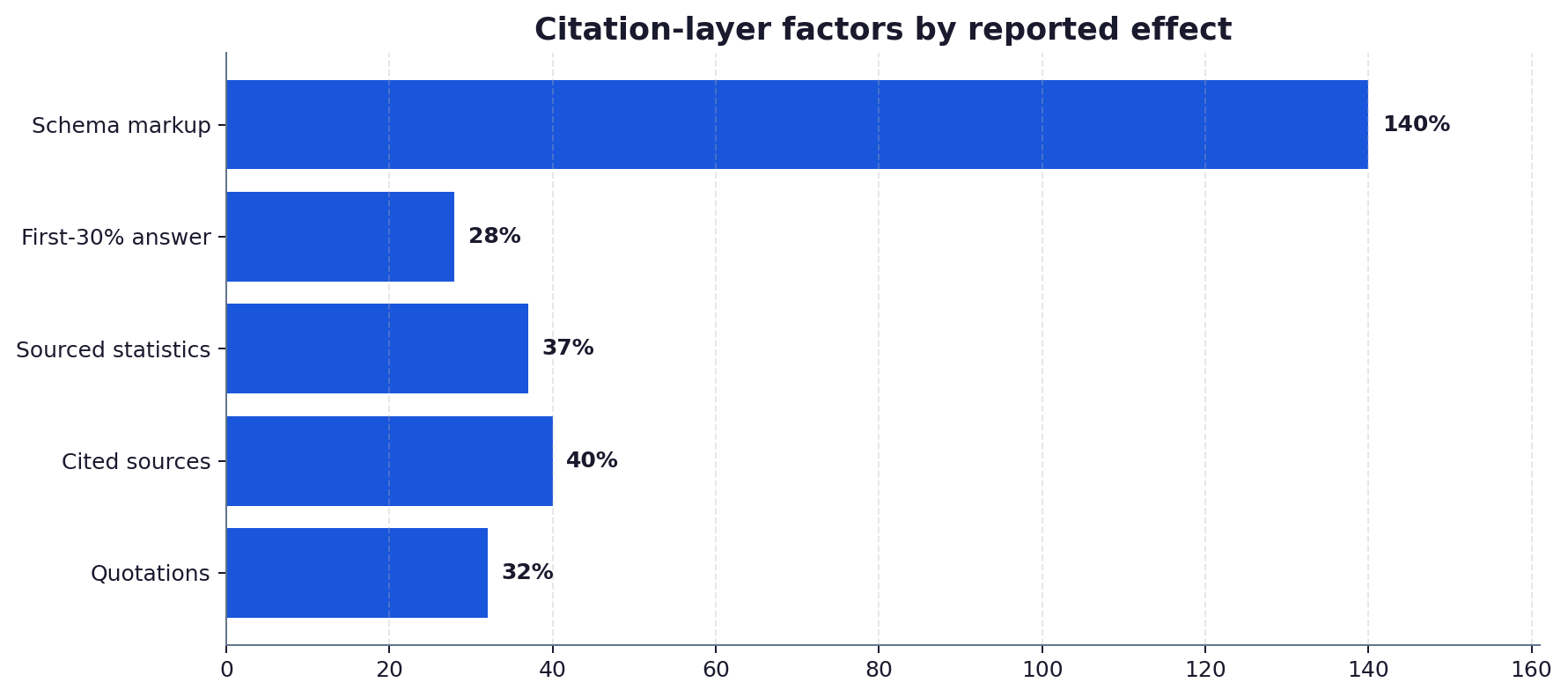
- Schema markup raised ChatGPT citation rates 2.4 times in a controlled test, making it a retrieval-layer priority (AiBoost, 2026).
- 44.2 percent of LLM citations came from the first 30 percent of body text, a citation-layer signal (Ziptie, 2025).
- Adding sources, statistics and quotations lifted generative visibility by up to 40 percent (Aggarwal et al., 2024).
- Retrieval depends on content an engine can parse cleanly, so structure is a precondition for citation (Search Engine Land, 2026).
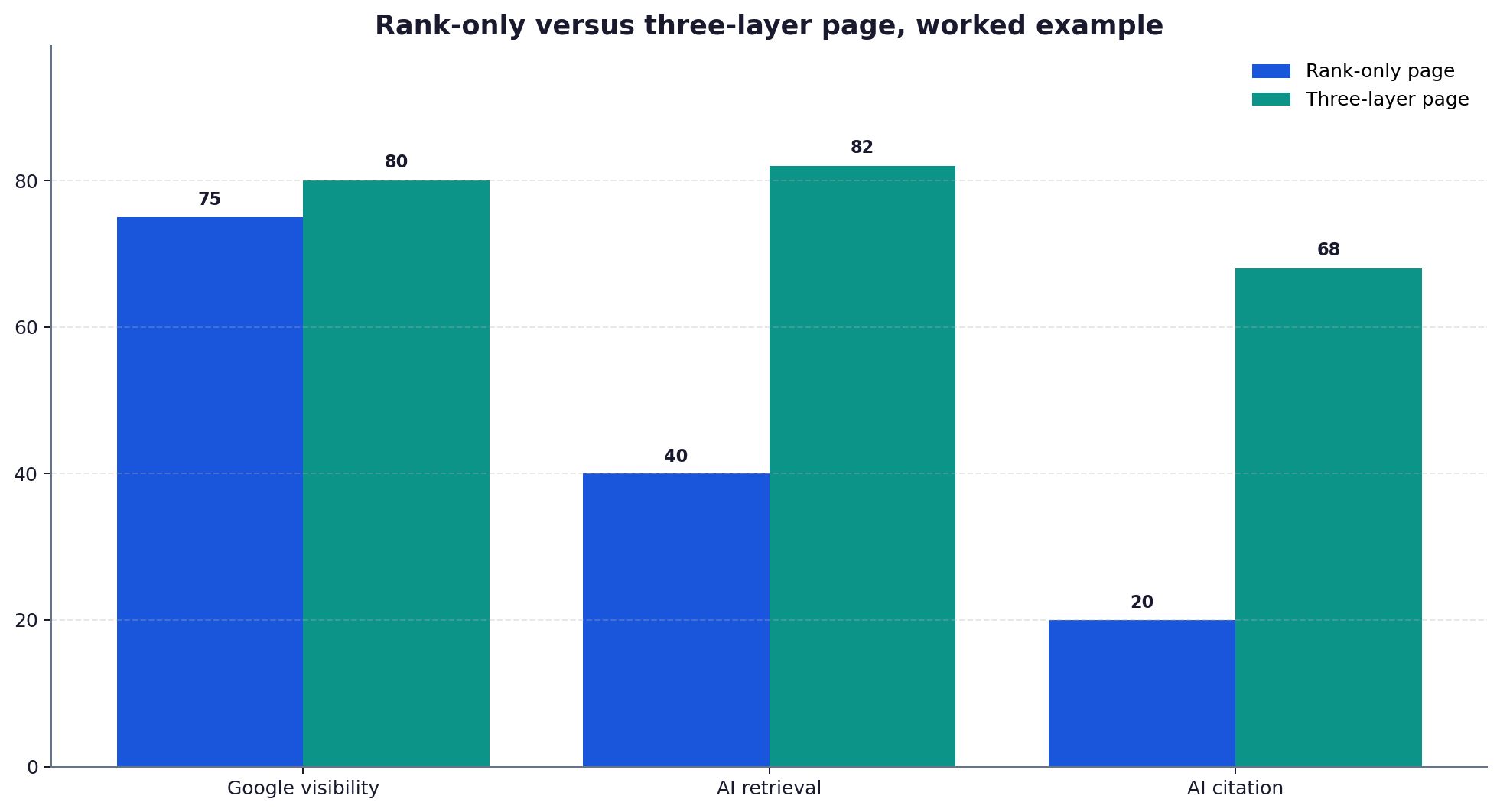
- The three layers reinforce each other, so a page built for all three outperforms one built for ranking alone (Ahrefs, 2026).
Why a ranking-only brief leaves money on the table
The standard content brief was written for one destination: Google’s organic results. It specifies a target keyword, a word count, headings, internal links and a meta description. None of that is wrong, but it stops at ranking. A page can rank perfectly and still never be cited in an AI answer, because citation depends on signals the brief never mentioned. In a world where a growing share of queries are answered by AI surfaces, a ranking-only brief optimises for half the opportunity.
The fix is not a separate GEO brief that duplicates the work. It is one brief with three layers, because the same page is the target for all three. Build the layers into a single checklist and a writer produces content that ranks, gets retrieved and gets cited in one pass.

Layer one: the ranking brief
This is the familiar layer and it still matters, because a page that cannot rank rarely enters the candidate set an AI engine retrieves from either. The brief specifies the primary and supporting keywords, a target word count matched to intent, a logical heading structure, internal links to and from related pages, a compelling title and meta description, and the search intent the page must satisfy. Nothing here is new, and that is the point: the ranking layer is the foundation the other two build on.
Layer two: the retrieval brief
Retrieval is about making the page easy for an engine to fetch, parse and understand. The brief specifies clean, semantic HTML with no content trapped in scripts or images, relevant Schema.org markup for the page type, a clear heading hierarchy that maps the page’s logic, and consistent entity naming so the engine can resolve who and what the page is about. Schema is the highest-leverage item here: in a controlled test, marked-up pages were cited 2.4 times more often, because structured data hands the retriever clean facts.
Layer three: the citation brief
Citation is about making a specific passage easy to lift and attribute. The brief specifies a direct, self-contained answer in the first 30 percent of the page, because that is where most citations come from. It calls for sourced statistics and dated figures, direct quotations that an engine can lift verbatim, named sources rather than vague claims, and a question-and-answer structure that matches how prompts are phrased. These are the signals that turn a retrievable page into a cited one, and they carry the largest measured effects in the research.
How the three layers reinforce each other
The layers are not in tension, they compound. A clear heading structure helps ranking, helps retrieval and helps citation. A sourced statistic helps citation and strengthens the page’s quality signals for ranking. Schema helps retrieval and feeds the entity understanding that supports both other layers. Because the signals overlap, a brief that names all three produces a page that is stronger on every surface, for little more effort than a ranking brief alone.
The brief as a single checklist
In practice the three layers collapse into one checklist a writer fills in before drafting. Ranking: primary keyword, intent, structure, internal links. Retrieval: clean HTML, schema type, entity names. Citation: first-third answer, statistics, quotations, named sources, question-and-answer blocks. A writer who works down that list produces content that serves Google and the AI engines together, which is the entire reason to write the brief this way rather than bolting GEO on afterwards.
Rolling it out across a team
The brief only changes outcomes if the team actually uses it, so make it the default template rather than an optional extra. Replace the existing brief with the three-layer version, train writers on the retrieval and citation layers they have not used before, and review early drafts against the checklist until the habits stick. Within a few cycles the additional layers stop feeling like extra work and become the normal way the team writes, which is when the citation gains start showing up across the whole content library rather than on a few flagship pages.
Frequently asked questions
What is a three-layer content brief?
It is a single content brief that optimises for three things at once: ranking, retrieval and citation. The ranking layer covers the traditional Google signals like keyword, structure and internal links. The retrieval layer makes the page easy for an AI engine to fetch and parse, mainly through clean HTML and schema. The citation layer makes a passage easy to lift and attribute, through a first-third answer, sourced statistics and quotations. Because one page is the target for all three, the brief is a single checklist rather than three separate jobs.
Why not write a separate GEO brief instead?
Because it would duplicate most of the work. The same page is the target for ranking, retrieval and citation, and the signals overlap heavily: a clear heading structure and a sourced statistic help all three layers at once. A separate GEO brief means writing two documents for one page and risks them contradicting each other. Folding the retrieval and citation layers into the existing brief produces a stronger page in a single pass, for little more effort than a ranking brief alone, which is the practical case for one document over two.
Which layer has the biggest effect on AI citation?
The citation layer carries the largest measured effects, followed closely by the retrieval layer. Schema markup, a retrieval-layer item, raised ChatGPT citation rates 2.4 times in a controlled test. Within the citation layer, a direct answer in the first 30 percent of the page matters because 44.2 percent of LLM citations come from there, and adding sources, statistics and quotations lifted visibility by up to 40 percent in the GEO research. Ranking remains the foundation, since a page that cannot rank rarely enters the retrieval candidate set in the first place.
Does the citation layer hurt my Google ranking?
No, it tends to help. The citation-layer signals, a clear direct answer, sourced statistics, named sources and a question-and-answer structure, are also quality signals that support ranking. A page that answers directly and cites evidence reads as more trustworthy to both a ranking system and a generative engine. The layers reinforce each other rather than competing, which is why a three-layer page usually performs better on Google as well as on AI surfaces, not worse.
How long does the extra brief take to write?
Very little once the template is in place. The three layers collapse into one checklist, and most of the retrieval and citation items are quick to specify: name the schema type, require a first-third answer, ask for two sourced statistics and a quotation. The added time is minutes per brief, against a meaningful gain in how often the resulting page gets cited. The larger cost is the one-off training to get writers comfortable with the retrieval and citation layers they may not have used before.
Can I apply this to existing content?
Yes, and retrofitting is often the highest-return work. Run your existing pages through an audit to find ones that rank but are never cited, then apply the retrieval and citation layers to them: add schema, move a direct answer into the first third, insert sourced statistics and quotations. These pages already have ranking and authority, so adding the missing layers can unlock citations quickly. Starting with pages that are one rewrite away from breaking through usually beats writing new content from scratch.
Sources and references
- GEO: Generative Engine Optimization. arXiv (Aggarwal et al.), 2024
- ChatGPT Browsing Cites Schema-Marked Pages 2.4x More: A Controlled UK Test. AiBoost, 2026
- The First 30% Rule: LLM citation-position bias. Ziptie, 2025
- Organization, Article and FAQ types. Schema.org, 2026
- How retrieval shapes which pages AI engines cite. Search Engine Land, 2026
- AI Overviews and citation patterns study. Ahrefs, 2026
See which of your pages already earn citations and which only rank. A free AI visibility report shows where the citation layer is missing, so your next brief targets the right pages.
Change log
- 2026-06-11: Initial publication.