TL;DR
- Ranking in ChatGPT means being cited or named inside its answers, not holding a blue link position.
- ChatGPT finds you two ways: from its training data and from live browsing through ChatGPT search. You optimise for both.
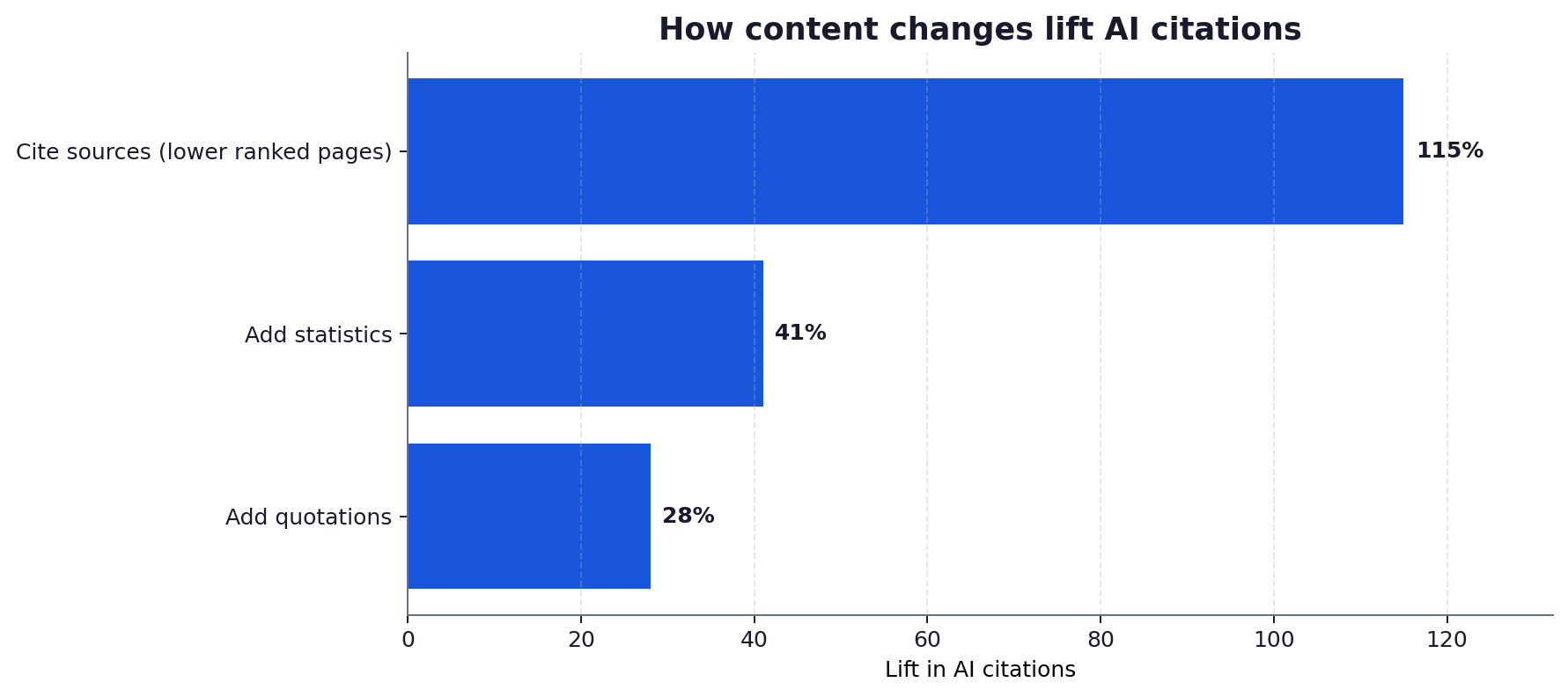
- A Princeton-led study found that adding statistics, quotations and cited sources lifts AI citations by 30 to 41 percent, and by up to 115 percent for lower ranked pages.
- Lead every section with a short, direct answer. AI engines lift these answer capsules straight into responses.
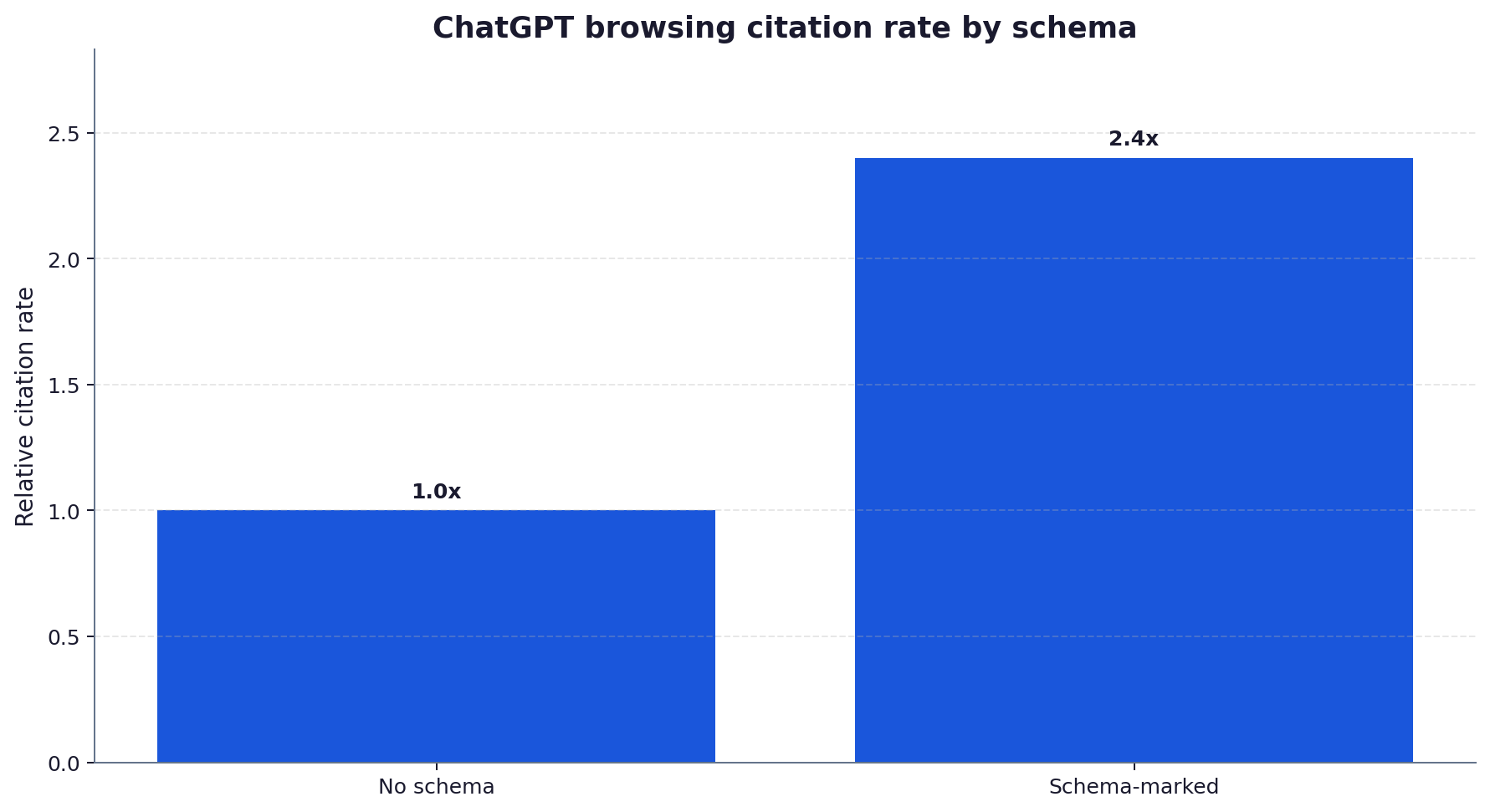
- Structured data matters. Schema-marked pages get pulled into AI answers far more often.
- Entity authority is the long game. The more independent, credible sources mention your brand, the more ChatGPT trusts you.
- Most sites see movement in 30 to 45 days. Measure it by prompting ChatGPT and tracking your mentions.
Introduction
You asked ChatGPT for the best option in your category. A competitor got named. You did not. Sound familiar?
That sting is why so many UK businesses now ask the same thing: how to rank in ChatGPT. Here is the part most people miss. Ranking in ChatGPT is not the same game as ranking on Google. There are no ten blue links to climb. There is one answer, and either your brand is inside it or it is not. The skill of getting named in that answer has a name. It is called Generative Engine Optimisation, or GEO, and it is fast becoming the most valuable channel in digital marketing.
This guide walks you through how ChatGPT decides who to cite, the tactics that move the needle, and how to measure progress. It is built on real research, not guesswork, and it is written for marketers and business owners who want results this quarter, not someday.
Why does this matter so much right now? Because the behaviour has already shifted. Millions of buyers now open ChatGPT before they open Google, ask for a recommendation, and act on the answer they get. If your brand is missing from that answer, you are invisible at the exact moment a decision is made. The cost is quiet, because you never see the click you did not get. That is what makes this worth fixing early.
At AiBoost, a London AI marketing agency, this is the work we do every day. Let us get into it.
What Ranking in ChatGPT Actually Means
Think about how people use ChatGPT. They do not scroll a page of results. They ask a question and read a paragraph. That paragraph is stitched together from sources the model trusts. Your job is to become one of those sources.
This is where GEO and traditional SEO part ways. SEO earns a ranked link in a list. GEO earns a mention inside an answer. The two overlap, but they are not the same, and one striking finding proves it. Fewer than ten percent of the sources cited by ChatGPT, Gemini and Copilot rank in the Google top ten for the same query. Our GEO versus SEO transferability guide maps exactly where they diverge.
So strong Google rankings help, but they do not guarantee you a seat at the table. You have to optimise for the engine you actually want to win. GEO has moved fast from a niche idea to a recognised discipline, with detailed industry playbooks now published on it, which tells you how seriously the market is taking this shift.
How ChatGPT Decides What to Cite
The Two Ways ChatGPT Finds You
First, there is the training corpus. This is the snapshot of the web the model learned from. If your brand was widely mentioned across credible sites when that snapshot was taken, ChatGPT already knows you. Second, there is live retrieval. When OpenAI introduced search in ChatGPT, the model gained the ability to browse the web in real time and cite fresh pages. That means a page you publish today can be cited tomorrow, even if it never entered the training data.
You optimise for both. For the training corpus, you build broad, consistent brand mentions over time. For live retrieval, you publish well structured pages and let the crawlers reach them. Want the deeper mechanics? Our breakdown of the way ChatGPT browsing works is the companion piece to this guide.
Why Entities Beat Keywords
Old SEO chased keywords. AI retrieval runs on entities. An entity is a known thing: a brand, a person, a product, a place. ChatGPT builds a web of associations around each entity. When your brand is linked to a topic across many trusted sources, the model learns that you belong in answers about that topic.
This is why brand mentions, even without a link, carry real weight now. Each independent reference strengthens your entity signal. The full list of ranking inputs is broken down in our guide to ChatGPT ranking factors, scored by confidence.
ChatGPT, Perplexity and Google AI Overviews: One Strategy, Three Engines
It helps to see ChatGPT in context. It is the biggest generative engine, but it is not the only one your buyers use. Perplexity leans heavily on live retrieval and shows numbered citations, which rewards crisp, quotable sentences. Google AI Overviews sits on top of classic search, so existing SEO equity carries more weight there. Microsoft Copilot draws on Bing’s index, which makes Bing indexing worth a check.
Here is the good news. The work overlaps. When you write extractable answers, add data, mark up your pages and build brand mentions, you are feeding every one of these engines at once. You do not need four strategies. You need one strong GEO foundation, then small tweaks per engine.
That is the principle behind everything we build at AiBoost. Get the foundation right, measure per engine, and adjust. If you are weighing where AI search fits next to your current rankings, our GEO versus SEO breakdown shows which signals transfer and which do not.
The Seven Tactics That Increase Your ChatGPT Citations
The most useful research here is the Princeton GEO study, presented at KDD 2024. The team tested nine content changes across 10,000 queries. The results were clear. Adding statistics lifted visibility in AI answers by 41 percent. Adding quotations lifted it by 28 percent. Citing sources lifted it by as much as 115 percent for lower ranked pages. These are not small gains.
1. Lead With Answer Capsules
Put a direct, two to three sentence answer right under every heading. AI engines lift these capsules into responses almost verbatim. This is the single fastest change you can make, and it doubles as a featured snippet play on Google.
Here is the test. If someone read only the first two sentences under a heading, would they have a complete answer? If yes, you have a capsule. If they need to read three more paragraphs to get the point, the model will struggle to lift a clean chunk, and so will a busy reader. Write the answer first, then earn the detail below it.
2. Add Statistics and Data
Numbers signal authority. A claim with a figure attached looks like evidence, and the Princeton data shows it gets cited far more. Aim for a relevant statistic every 150 to 200 words, and always give the source.
3. Quote and Cite Authoritative Sources
Linking out to credible references makes your page look like a researched resource, not an opinion. It is the tactic with the biggest measured lift for underdog pages. Quote named experts. Cite studies. Link to official documentation such as Google’s structured data guidelines when relevant. For more on how this fits a wider plan, see our content marketing service.
4. Implement Schema Markup
Schema is structured data that tells machines exactly what your page is about. FAQPage and Article schema turn your content into clean, machine-readable question and answer pairs. In our own controlled test, schema-marked pages were cited 2.4 times more often by ChatGPT browsing. If you do one technical thing this month, do this.
5. Build Entity Authority
This is the slow, compounding work. The more reputable sites mention your brand, the stronger your entity signal becomes. Digital PR, guest features, directories and partnerships all feed it. Our link building service is built around exactly this outcome.
6. Keep Content Fresh
AI engines favour recent, maintained pages. A post with a recent update date and current data beats a stale one. Refresh your best pages on a schedule. Add new figures. Update the year. Small, regular edits keep you in the running.
7. Let the AI Crawlers In
None of this matters if the bots cannot reach you. ChatGPT uses crawlers such as GPTBot to gather pages. Check your robots.txt allows them, and confirm the rules in OpenAI’s bot documentation. Blocking the crawler is the most common own goal we see in audits.
How to Structure a Page So ChatGPT Can Extract It
Picture the model skimming your page for a self-contained chunk it can quote. Give it that chunk on a plate. Start with the question as a heading. Answer it immediately. Then expand.
- Use question-based H2 and H3 headings that match how people ask.
- Answer in the first 40 to 60 words under each heading.
- Keep paragraphs to two or three sentences.
- Use bullet lists and tables for facts, steps and comparisons.
- Add FAQ schema so each answer becomes a citation candidate.
If you want the tactical version of this, with twelve specific moves ranked by citation lift, read our guide to optimising for ChatGPT search. It is the natural next step after this one.
How to Measure Whether You Rank in ChatGPT
Google gives you rank trackers. ChatGPT does not, at least not yet. So you build your own simple system. Pick fifteen to twenty questions a real customer would ask. Run them in ChatGPT. Note whether you appear, whether you are cited, and who shows up instead.
Run the same prompts every couple of weeks. The number that matters is your share of mentions across the set, and which direction it is moving. A few specialist tools now track this automatically, but a spreadsheet and a fixed prompt list will take you a long way.
Remember the timeline. Most sites that apply these tactics see the first movement within 30 to 45 days, with larger gains building over a quarter. This is a compounding channel, not an overnight one.
A Worked Example: How One Page Earns the Citation
Let us make this concrete. Say a London accountant asks ChatGPT, what is the best way to handle VAT for a small e-commerce business. Two firms have published on the topic. Which one gets named?
Firm A wrote a 1,500 word essay with a long preamble, no figures, no sources and no schema. The advice is fine, but the page is hard to extract and carries weak signals. Firm B opened with a 40 word answer to the exact question, backed each point with a statistic and a link to official guidance, added FAQ schema, and had been mentioned across a dozen finance blogs over the past year.
ChatGPT names Firm B. Not because the advice is better, but because the page is easier to lift and the brand carries stronger entity signals. That is GEO in a single scene. The model is not judging effort. It is judging clarity, evidence and trust.
Now apply the same lens to your own top pages. Open one. Can you find a clean, 40 word answer near the top? Is there a statistic with a source? Is there schema in the code? Has your brand been mentioned anywhere credible this year? Each yes raises your odds. Each no is a fix on your list.
Common Mistakes That Keep You Out of ChatGPT Answers
- Blocking the crawler. If GPTBot cannot read the page, nothing else matters.
- Burying the answer. A 300 word preamble before the point loses the citation.
- Opinion with no evidence. No stats, no quotes, no sources means low trust.
- No schema. You are making the model guess what your page means.
- Keyword stuffing. Entities and clarity win now, not repetition.
Implementation Checklist
Work through this in order. You can do most of it this week.
- Confirm your robots.txt allows GPTBot and other AI crawlers.
- Add a two to three sentence answer capsule under every heading.
- Insert a relevant statistic, with its source, every 150 to 200 words.
- Add at least three citations to authoritative, non-competitor sources.
- Mark up the page with Article and FAQPage schema.
- Rewrite headings as the questions your customers actually ask.
- Update the published or modified date and refresh any old data.
- Build a list of 15 to 20 buyer prompts and test them in ChatGPT.
- Plan three brand-mention placements this month to grow entity authority.
- Re-test your prompts in 30 days and record the change.
SEO Versus GEO: What to Optimise For
Use this table to decide where to put your effort. Most brands need both, but the balance depends on where your buyers actually search.
| Factor | Traditional SEO | GEO (ranking in ChatGPT) |
|---|---|---|
| Goal | Rank a link in a list | Be cited inside one answer |
| Main signal | Keywords and backlinks | Entities, fact density, schema |
| Unit of success | Position on the page | Share of mentions in answers |
| Best content move | Match search intent | Lead with extractable answers |
| Measurement | Rank trackers | Prompt testing over time |
| Time to results | Weeks to months | 30 to 45 days, then compounding |
Frequently Asked Questions
Can you really rank in ChatGPT?
Yes, though ranking means being cited or named in an answer rather than holding a link position. You earn it with clear, well structured, well sourced content and strong brand mentions across the web.
How long does it take to appear in ChatGPT answers?
Most sites that apply GEO tactics see the first movement within 30 to 45 days, with bigger gains over a full quarter. Live browsing can surface a new page within days if it is crawlable and well structured.
Is ranking in ChatGPT different from SEO?
Yes. SEO earns a ranked link in a list, while GEO earns a mention inside a single synthesised answer. Fewer than ten percent of AI-cited sources rank in the Google top ten for the same query, so the two need separate strategies.
Does schema markup help ChatGPT cite my page?
Strongly. Schema labels your content so machines can read it cleanly. In a controlled test, schema-marked pages were cited about 2.4 times more often by ChatGPT browsing.
What is the single most effective tactic?
Leading every section with a short, direct answer capsule. It is fast to apply and AI engines lift these answers into responses, which also wins featured snippets on Google.
Do I need backlinks to rank in ChatGPT?
Links help, but unlinked brand mentions also count. AI engines build entity authority from how often credible, independent sources reference your brand, with or without a link.
How do I measure my ChatGPT visibility?
Build a fixed list of 15 to 20 buyer questions, run them in ChatGPT regularly, and track how often your brand is named or cited. Watch the trend rather than any single answer.
Start Before Your Competitors Do
Ranking in ChatGPT is winnable, and it is still early. The brands that structure their content for extraction, back it with data and sources, and build real entity authority are the ones getting named today. The tactics in this guide are proven, and most of them you can start this week.
The window will not stay this open. As more businesses learn how to rank in ChatGPT, the easy wins get harder. Moving now is the advantage.
If you want a partner to walk you through it, book a free GEO audit and we will show you exactly where you stand in AI answers today. Prefer a chat first? Get in touch with the AiBoost team and we will take it from there.
Sources and references
- GEO: Generative Engine Optimization (nine content changes tested across 10,000 queries). Princeton University, KDD 2024, 2024
- Introducing ChatGPT search. OpenAI, 2024
- Overview of crawlers and user agents (GPTBot). OpenAI, 2026
- Introduction to structured data markup in Google Search. Google Search Central, 2026
- Generative Engine Optimization (GEO): the complete playbook. Backlinko, 2025
Want to know exactly where you stand in ChatGPT answers right now? Run a free GEO audit on your domain and we will show you which queries name your brand, which name a competitor, and the highest-impact fixes to close the gap.
Change log
- 2026-06-18: Initial publication.